Maintenance & Buying Guide
Learn how to care for your blade and how to buy and safely transport cutlery home.
Steel Selection: Carbon vs. Stainless Steel
The steel composition of a blade dictates its sharpness, resilience, and required maintenance. Learn more about the raw elements, charcoal fires, and clay tempering in the Craftsmanship & History section.
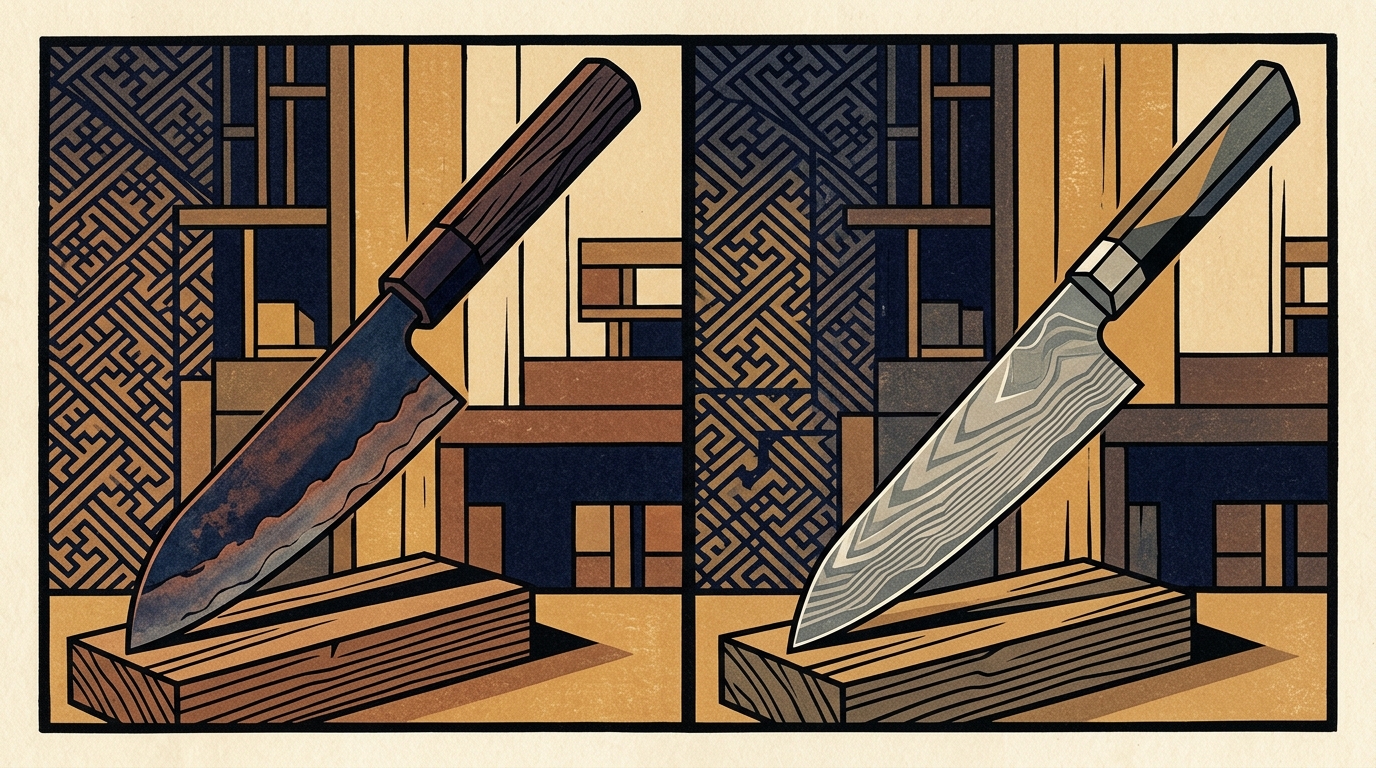
Carbon Steel (Aogami / Shirogami)
Offers unmatched sharpness, edge retention, and is easy to sharpen. However, it reacts with acids and rusts very easily if left wet. Ideal for professionals and purists.
- Common alloys: Aogami (Blue Paper), Shirogami (White Paper)
- Edge retention: Exceptional (stays sharp longer)
- Sharpening: Easy (metal grinds smoothly)
- Reactiveness: High (oxidizes easily, forms a patina or rust)
Stainless Steel (VG-10 / SG2 / AUS-8)
Highly resistant to rust, staining, and chipping. Requires less daily maintenance, making it perfect for home cooks. Can be slightly harder to sharpen than carbon steel.
- Common alloys: VG-10, SG2 (R2), AUS-8, Gin-3 (Ginsan)
- Edge retention: High (very good)
- Sharpening: Moderate (requires slightly more effort)
- Reactiveness: Very Low (highly rust-resistant)
Essential Rust Prevention & Handling
Wipe Dry Instantly
Wipe dry immediately: Hand-wash with mild soap and wipe completely dry with a soft cloth after every use.
No Dishwashers
No Dishwashers: The heat, moisture, and abrasive chemicals will ruin the wooden handle and corrode the edge.
Oil Long-term Storage
Oil Storage: For long-term storage (especially carbon steel), apply a thin coat of mineral or camellia oil (Tsubaki oil) to prevent humidity rust.
Whetstone Grit Guide
Sharpening a Japanese blade regularly on a wet stone helps preserve its thin profile and can reduce micro-chipping. Choose the correct grit for the job. Major cutlery capitals like Sakai and Seki offer hands-on sharpening classes and experiences.
Coarse (#200 – #400)
Coarse Grit (#200 – #400): Used for restoring severely dull blades and repairing chips or nicks.
Medium (#800 – #1200)
Medium Grit (#800 – #1200): The essential stone for regular sharpening. Restores a clean, working edge.
Fine (#3000 – #8000)
Fine Grit (#3000 – #8000): Used for polishing and honing. Creates a razor-sharp, mirror-finished edge.
Tourist Purchase & Transport Guide
1. Public Carrying & Transport
When carrying a knife from the store to your hotel, keep it sealed in its original box with the receipt. Unpackaged carrying in public violates the Swords and Firearms Law.
2. Flying & Customs
Never pack cutlery in your carry-on luggage; it will be confiscated. All knives, scissors, and clippers must be packed securely in your checked baggage.
3. Wooden Handle Restrictions
Be careful with exotic wood handles (like Rosewood). Some countries (US, Australia) regulate these under CITES. Choose local woods like Magnolia, Oak, or pakkawood for hassle-free travel.
FAQ
Focused on practical questions users still have after reading the guide.
Single or double bevel?
Single bevel suits fish-centric prep; double bevel is easier for everyday all-purpose use.
First whetstone?
A medium stone is the most practical starting point for routine maintenance.
Bringing it home?
Keep it checked, retain the box and receipt, and confirm import rules for your destination.
Avoid reactive steel?
Carbon steel is rewarding if you enjoy maintenance; stainless is the practical choice for daily use.
Explore More of the Craft
Continue your journey through the art of Japanese cutlery.